Learn More About Hosting
Download the full overview of how the programme works, what’s involved and how organisations use Saltire Scholars to support projects and long-term hiring.

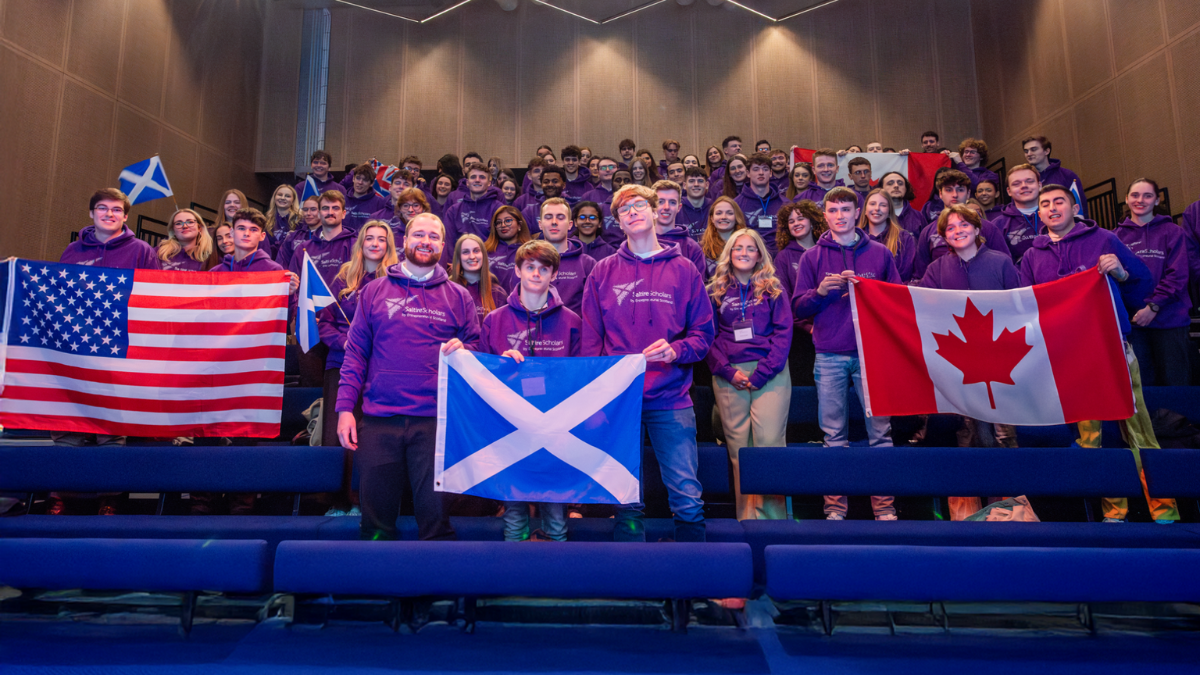
Finding the right people is one of the biggest constraints on business growth.
Across Scotland and beyond, organisations regularly tell us the same thing: they know talented graduates exist, but accessing them early - before they enter the wider graduate recruitment market - can be difficult, time-consuming and highly competitive.
The Saltire Scholars Internship Programme, run by Entrepreneurial Scotland, was created to help solve that challenge.
Each year, the programme connects organisations with ambitious, high-potential university students through 8–12 week summer internships, giving businesses early access to Scotland’s future talent while making progress on important work.
Since launching in 2006, more than 500 organisations worldwide have partnered with Entrepreneurial Scotland to host 2,000+ Saltire Scholar interns, spanning sectors such as engineering, technology, finance, life sciences, manufacturing and business services. In 2025 alone, 188 interns joined host organisations across the world, contributing to projects, supporting teams and helping organisations move important work forward.
For many businesses, hosting a Saltire Scholar becomes more than a summer placement. It becomes a practical way to identify and engage future talent before graduation.

The Saltire Scholars Programme matches organisations with pre-vetted, high-calibre penultimate and final-year undergraduate students from Scotland’s sixteen universities.
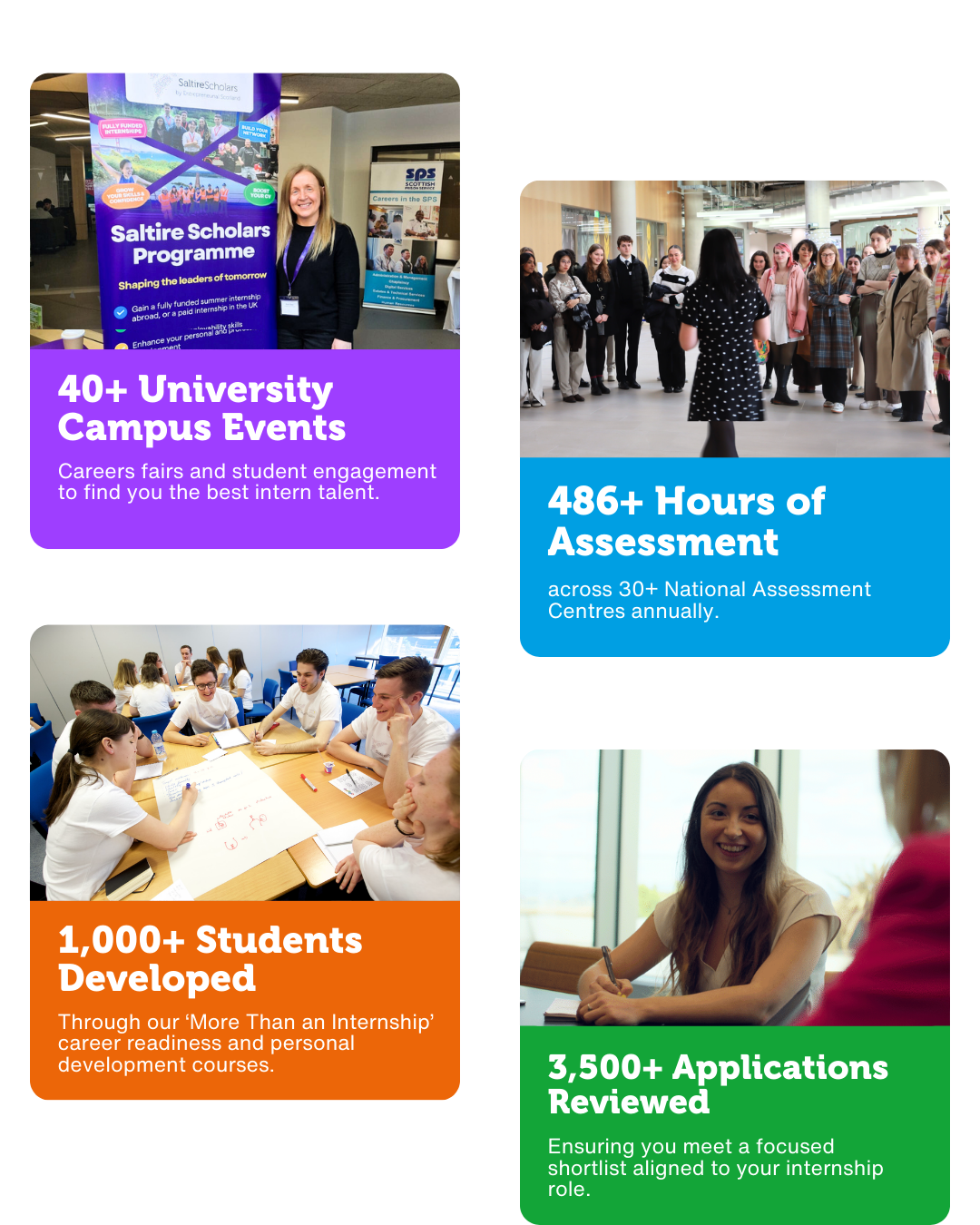
Each year Entrepreneurial Scotland attracts thousands of applications and runs a structured national selection process, including assessment centres and candidate evaluation, to identify students who demonstrate capability, curiosity and leadership potential.
Organisations hosting an intern gain access to this pre-selected candidate pool, significantly reducing the effort typically required to find strong early-career talent.
Rather than running a full recruitment process themselves, host organisations work with the Saltire Scholars team to:
Define the internship role or project
Receive a shortlist of suitable candidates
Interview selected students
Choose the intern who joins their organisation
This structured approach helps organisations access high-quality candidates faster while maintaining full control over the final hiring decision.
Saltire Scholar internships are designed around meaningful work rather than observation.
Over the course of an 8–12 week placement, interns typically contribute to defined projects or support teams where additional capacity and fresh thinking can make a difference.
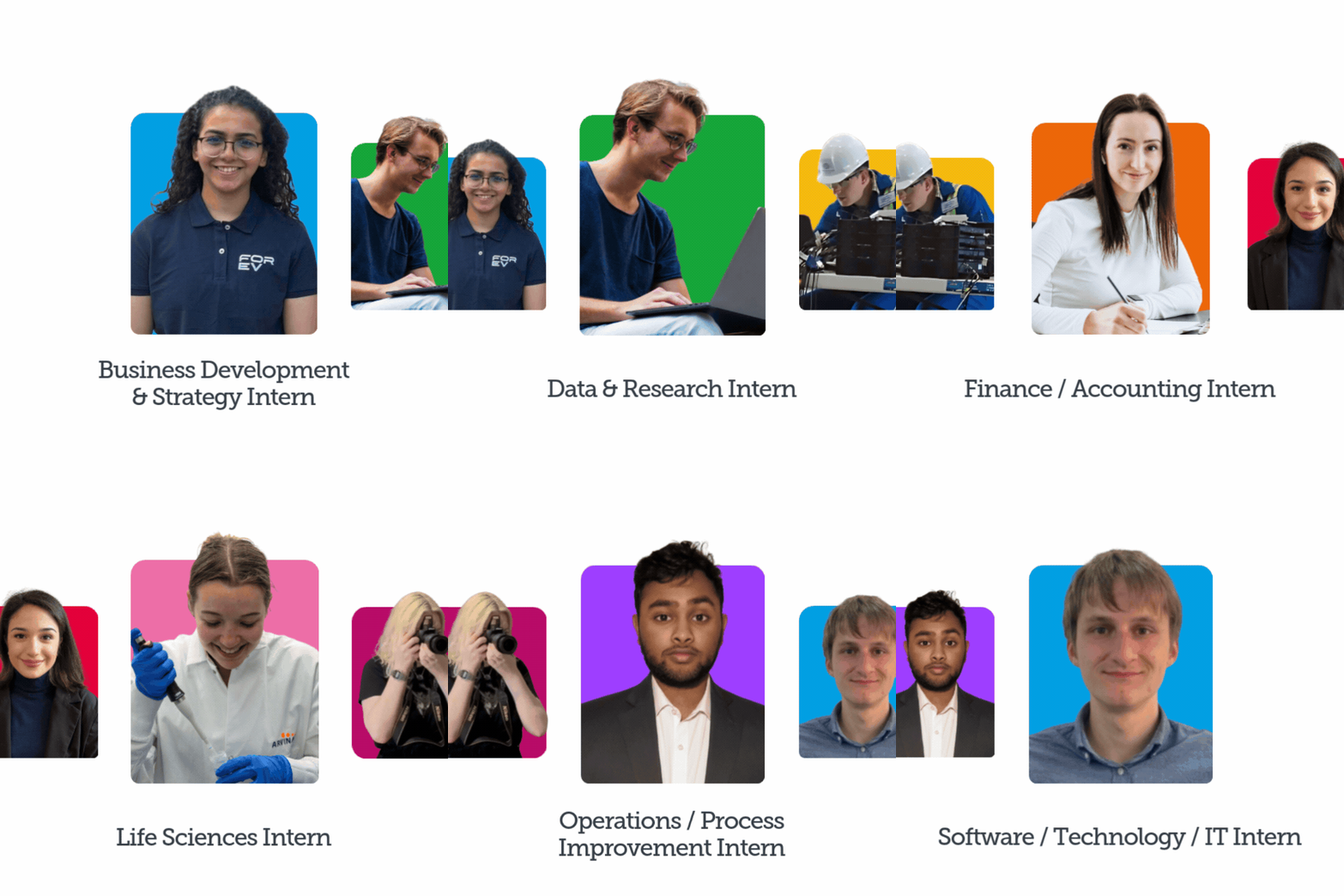
Internship roles vary widely depending on the needs of the host organisation. Previous placements have supported work across areas including:
Engineering and product development
Finance and accounting
Marketing and communications
Technology and software development
Business operations and strategy
Research and data analysis
Life sciences and clinical research
For many organisations, internships provide a way to progress work that is important but difficult to prioritise internally — whether that involves researching new opportunities, analysing operational data, improving internal processes or supporting new initiatives.
Saltire Scholars bring at least three years of university study, along with up-to-date technical knowledge, curiosity and a willingness to tackle real business challenges.
Organisations partner with the programme for a number of reasons, but several themes appear consistently across Saltire Scholar host companies.
Large organisations often invest heavily in campus recruitment to identify future employees before graduation. For many businesses — particularly SMEs — building that presence independently is difficult.
The Saltire Scholars Programme helps level the playing field, providing direct access to talented students from across Scotland’s universities without requiring a dedicated campus recruitment function.
Internships are often used to support time-bound projects or areas where additional capacity can accelerate progress.
Interns may contribute to research, development, analysis or operational improvements that would otherwise remain on the backlog while full-time teams focus on day-to-day priorities.
For many organisations, hosting an intern becomes part of a longer-term recruitment strategy.
Internships allow companies to assess capability and cultural fit in a real working environment before offering graduate employment, reducing the uncertainty often associated with early-career hiring.
This “try before you hire” approach helps organisations identify strong future employees while giving students valuable real-world experience.
Students bring new technical knowledge, emerging skills and a fresh perspective into organisations.
Their curiosity often encourages teams to question assumptions, explore new approaches and identify opportunities for improvement that might otherwise go unnoticed.
Not all internships are the same. One of the reasons organisations choose the Saltire Scholars Programme is the depth of the student selection and preparation process before candidates reach a host organisation.
Each year we attract thousands of applicants from across all 16 Scottish universities, with students progressing through a rigorous multi-stage assessment process.
This goes well beyond reviewing CVs or academic performance. Candidates are assessed for qualities that matter in the workplace, including leadership potential, initiative, problem-solving ability, teamwork and communication.
For host organisations, that level of assessment matters. It means the students you meet have already demonstrated the mindset and capability required to contribute meaningfully during a short internship.
Hosting a Saltire Scholar also allows organisations to identify long-term potential early, observing how a student operates within their team and culture before they enter the wider graduate job market.
Before internships begin, students also complete a focused development programme covering leadership, entrepreneurial mindset, professional communication and teamwork.
By the time they join a host organisation, Saltire Scholars are:
professionally prepared and workplace-ready
comfortable taking ownership of defined work
trained to approach challenges with a problem-solving mindset
ready to contribute and learn quickly in a professional environment
Hosting an intern should be a positive experience for both organisations and students.
The Saltire Scholars team supports host companies throughout the process, helping to:
shape internship descriptions
manage candidate applications
coordinate interviews and matching
support intern logistics where required
provide development and check-ins during the placement
This structured support allows organisations to focus on integrating the intern into their team and ensuring the internship delivers meaningful outcomes.
Over nearly two decades, the Saltire Scholars Programme has developed a strong network of host organisations across multiple industries.
Many companies return to the programme year after year, using internships as a consistent way to:
engage with emerging talent
progress defined projects
build relationships with universities
strengthen their future workforce pipeline
For organisations thinking about how to identify and develop the next generation of talent, internships can provide a practical and low-risk starting point.
The 2026 Saltire Scholars Programme is now underway, and organisations are currently confirming placements for summer internships.
If your organisation is considering how an intern could support a project, strengthen team capacity or help you identify future talent, now is the time to explore the next steps.
Entrepreneurial Scotland works with organisations of all sizes - from growing SMEs to large enterprises - helping them access Scotland’s top pre-graduate talent through structured internship placements.
Organisations interested in hosting a Saltire Scholar this summer can learn more about how the programme works and speak with the team about next steps.