
From pioneering new renewables projects to planning one of the world’s largest green AI data centre networks, ILI Group’s Mark Wilson is still spotting opportunities ahead of the curve. By Colin Cardwell

Mark Wilson’s approach to entrepreneurship is enthusiastically informed by a desire to build on (literally) past successes and swiftly look for a fresh challenge.
The founder and CEO of Hamilton based clean energy infrastructure developer ILI Group says it has been at the forefront of moving Scotland toward net zero for the past 16 years and believes its plans to build data centres that run from green energy give the company a key advantage. ILI stands for Intelligent Land Investments, and the company is in its 23rd year, having grown from a property firm operating in its locale in the central belt to being a pioneer in the green data centres sector.
Wilson, a native of County Tyrone who came to Scotland with his parents during childhood explains how that journey came about: “I studied accountancy at the University of Abertay but decided that wasn’t my thing. I left and began buying property.”
In 2004 he set the company up, raising money through private investors such as family and friends and via referrals, in the days before crowdfunding became commonplace. “I bought in and around North Lanarkshire and built up a portfolio then looked at the next step on the ladder, which was moving into land and selling it to major housing developers such as Persimmon and Barratt.
“When the financial crisis hit in 2008 that market slowed down but rather than sit still – and with no debt – we pivoted to onshore wind, applying a similar model with private investors,” he says.
The experience gained in site selection and planning was later used to help reduce CO₂ emissions through renewable energy projects. “Projects ranged from medium-sized, single turbine developments up to large scale multi-turbine windfarms,” he says, adding that 600 landowners signed up with ILI. More than 150 of the most suitable sites were progressed, resulting in 96 successful planning approvals.
“We then moved into energy storage which was a big turning point for the company and set up ILI Group Plc in 2017.” That he says has aligned itself with the Scottish Government’s energy policy and plans to bring over 4.5 gigawatts (GW) of energy storage to the market through pumped storage hydroelectricity and utility scale battery storage.
In 2023 the group completed its sale of its Loch na Cathrach pumped storage hydro project to Statkraft, harnessing the waters of Loch Ness and generating 500 megawatts (MW), enough to power the whole of the Highlands for nine and a half hours, says Wilson. Last year the group lodged a planning application for a storage project located at Loch Awe in Argyll and Bute. ILI Group has now expanded into digital infrastructure with The Stoics (named after ancient Stoic philosophers), a £15 billion green Scottish digital network.
Three hyper-scale green data centres – Cato (600MW) in Fife, Aurelius (400 MW) in North Lanarkshire and Rufus (540MW) in East Ayrshire – will he explains form one of the world’s largest clusters, combining clean energy expertise with digital infrastructure.
Wilson’s decision to enter that market initially came from a conversation with a friend at Scottish Enterprise. “He said there were several overseas companies eyeing Scotland as a potential location for data centres.”
As these facilities consume vast quantities of electricity, locating them in a country with abundant renewable energy can significantly reduce their carbon footprint. “As we’d operated across different sectors and had evolved into a green energy company, we could become involved in developing green data centres, powered by renewable energy which has proved to be a key differentiator for us,” says Wilson.
“That’s underpinned by the fact that there’s a huge surplus of renewable energy here so if we can join that up with data centres it helps balance the grid and The Stoics will be the biggest green AI data network on the globe.”
There is also, he points out, a biodiversity gain. “And we’re going to use the heat that comes from these centres for the benefit of either district heating or agriculture.”
The Government’s target is to achieve a clean power system in Scotland by 2030, as part of its wider ambition for net zero carbon emissions by 2050. And as Scotland had 1,236 renewable energy projects with an estimated capacity of 85.4GW in the planning pipeline at the end of March 2026, Wilson believes that is an achievable goal.
Importantly, he adds, ILI Group entered the market at an early stage with wind power, energy storage and now with data centres. “That is where we’ve had a competitive advantage by spotting the opportunities before they started to gain traction with others. We’ve also been willing to take big risks, and that’s paid off for us.”
His real passion, says Wilson, lies in working with his small team of nine, most of whom have been with the company for between 15 and 18 years though there are some 200 people indirectly working for ILI, such as major legal firms and technical companies.
“We have some wonderful people who support us and as a small team we punch above our weight.”
ILI was shortlisted as Green Energy Company of the Year in 2026 for the British Business Awards while Wilson was nominated for EY’s Entrepreneur of the Year award in 2025.
“My view is that when you get to the top of the mountain you can put the flag up and then find a new mountain to climb. The next one is always higher and more difficult – but I adore the challenge.”
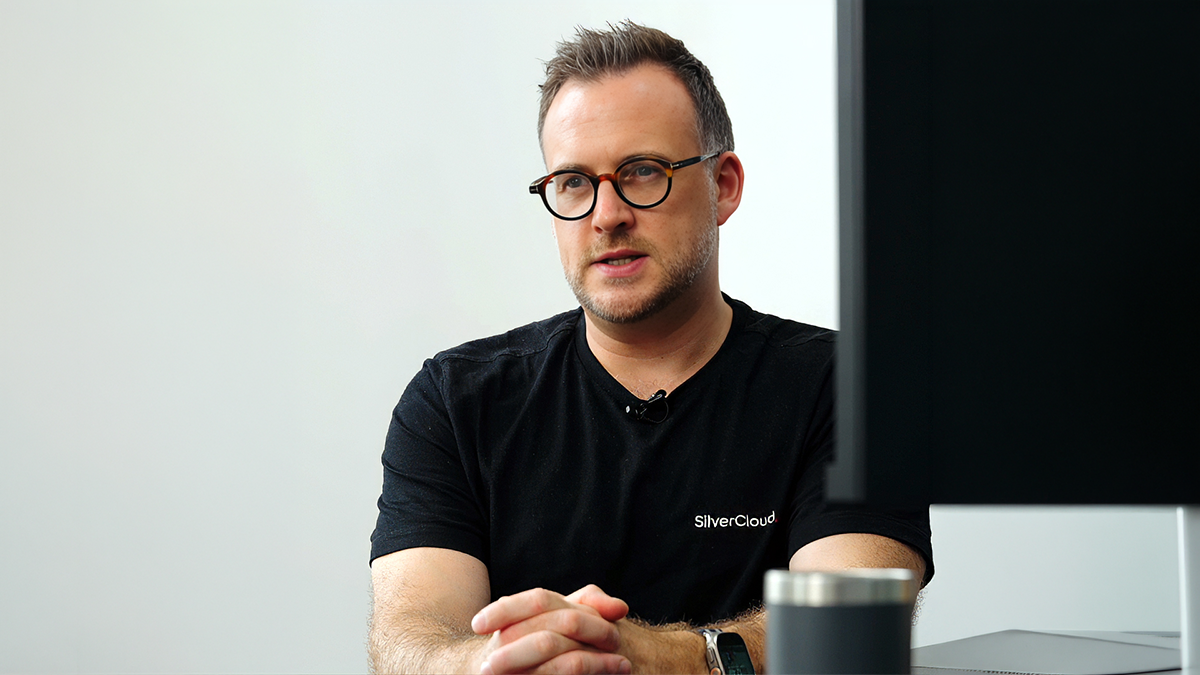
Tony Quinn, founder of SilverCloud and Acumen, shares his entrepreneurial journey from leaving school at 16 to building two of Scotland’s fastest-growing technology businesses.
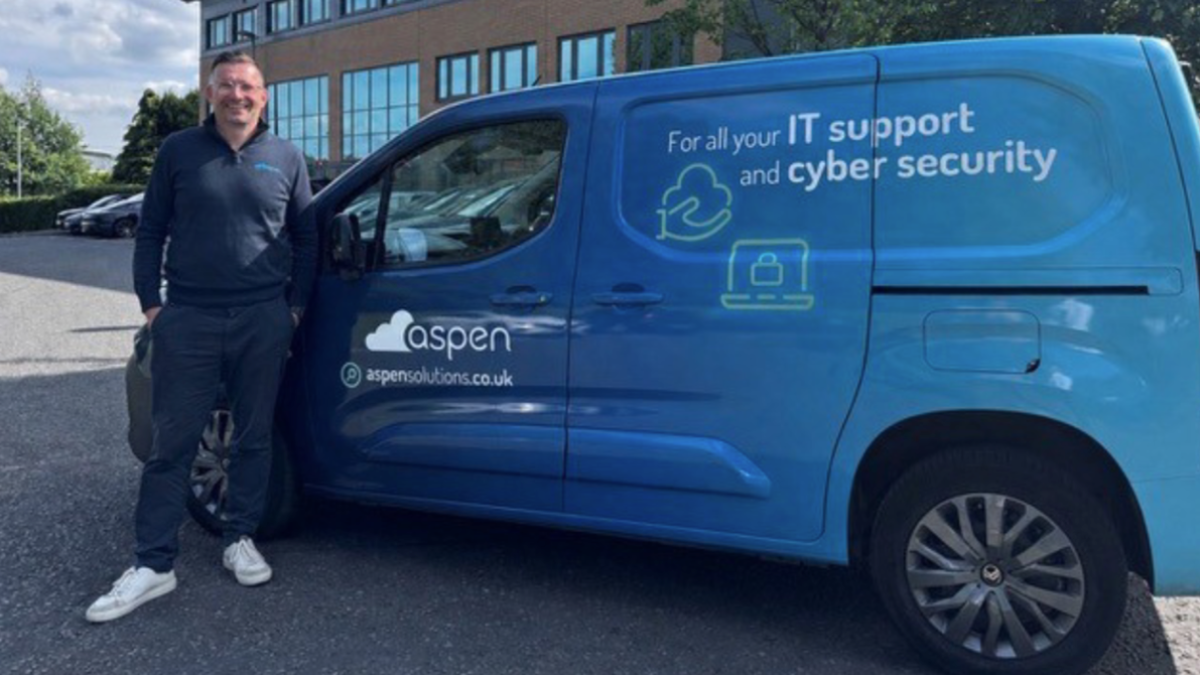
From accountancy to IT entrepreneurship, Paul Harkins has transformed Aspen Solutions into a fast-growing technology business delivering cyber security, cloud infrastructure and event services for clients across the UK and beyond.
Entrepreneurs are a diverse crew. They all don't emerge from the same mould, one the public sometimes views as via a university spinout preparing itself for international acquisition.