About Me
My name's Cameron Powell, and I'm a third-year Product Design & Innovation student at the University of Strathclyde. I applied to the Saltire Scholars Programme because I wanted access to a genuinely strong internship opportunity, but also because I wanted to put myself in situations that would force me to improve. Leadership, communication and confidence were all areas I knew I needed to build before heading into final year and, eventually, the world of work.
Before Saltire, I probably had quite a narrow idea of what my degree could lead to. I thought Product Design & Innovation mostly meant physical products, design projects, or more traditional innovation roles. This internship opened my eyes to the fact that the same skills can be used in far more areas than I expected.
My Internship
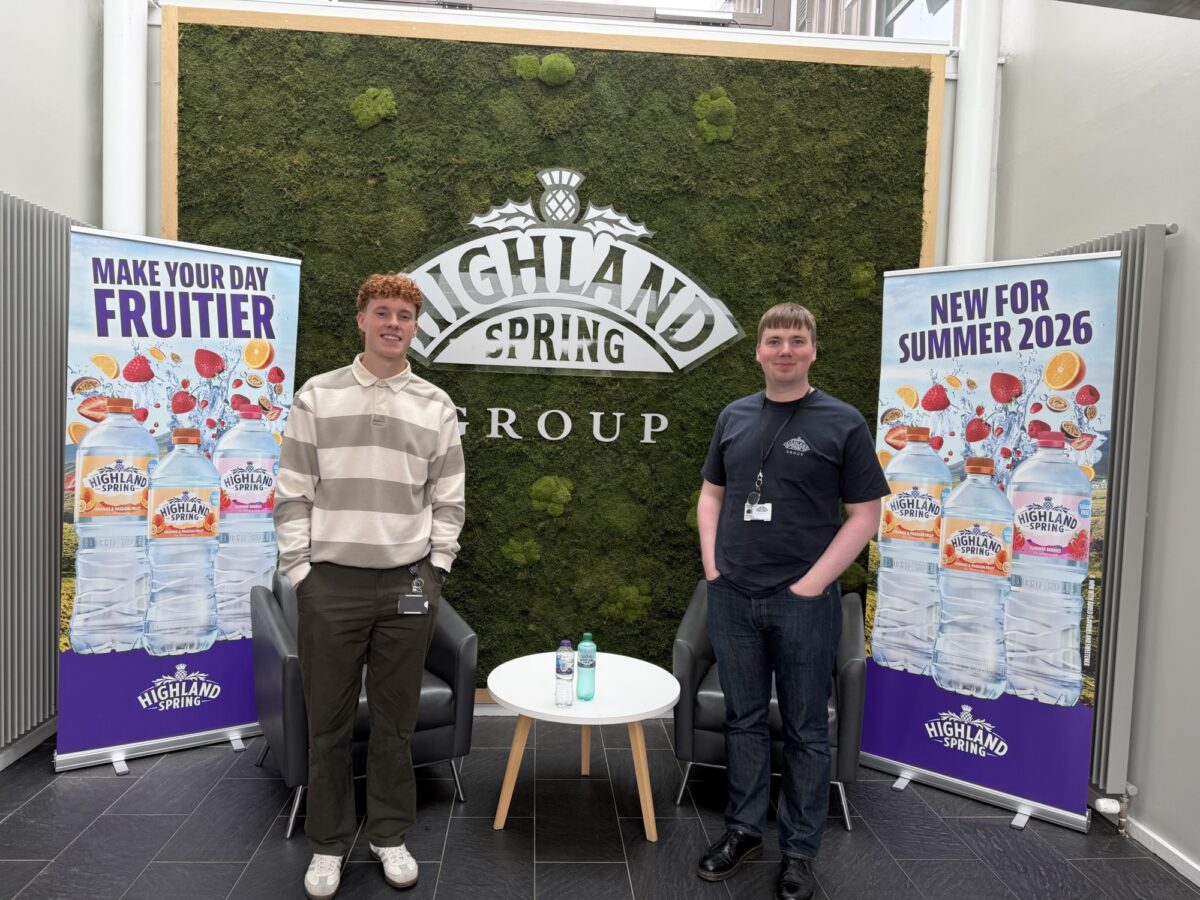
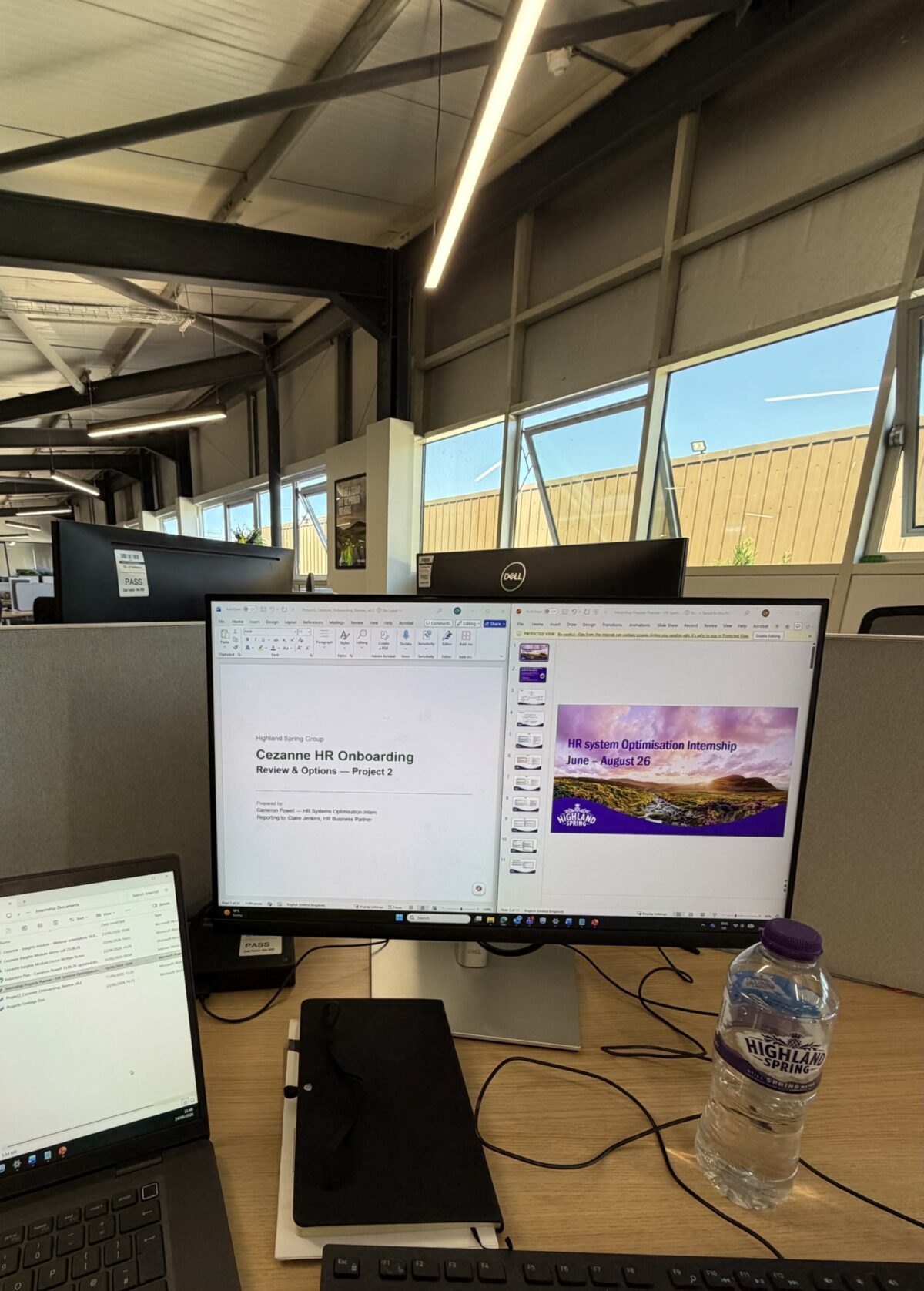
I spent 10 weeks as an HR Systems Optimisation Intern at Highland Spring Group, based at their Ochils site in Blackford. On paper, it wasn't the most obvious fit — I'm a Product Design student, not an HR student — but that ended up being exactly what made it interesting.
My main project was reviewing and redesigning Highland Spring's new starter process from the ground up. I ran stakeholder discovery across the business, mapped out a process that was spread across seven disconnected systems, and led the design and recommendation for a new HR onboarding system. The recommendation was validated end to end with a live test hire and approved by our HR Director. Alongside that, I redesigned the offer process and built a suite of standardised templates, and I got stuck into using AI to automate manual HR reporting and streamline repetitive admin work.
It didn't take long to realise that this was, at its core, product design work — just with an HR skin on it. Understanding a user's problem, mapping out the current experience, questioning why things are done a certain way, designing something better, and testing it before rolling it out. The subject matter was new, but the way of thinking wasn't.
A lot of what I was doing was not about having the perfect answer straight away. It was about asking better questions, listening properly, spotting friction in a process and turning a messy problem into something clearer and easier to use. That is design thinking, just applied to HR systems, onboarding, automation and business processes rather than a physical product.
Impact and Experience
The project I led is projected to save the business roughly 186 admin hours a year once fully live, while also replacing a fragmented, person-dependent process with something standardised and scalable. I presented the recommendation to senior leadership, including our HR Director, and it was approved — which was genuinely one of the most rewarding moments of the whole ten weeks.
What made it feel even better was that the work was actually going to be used. It wasn't a university project where the final submission disappears into a folder. It was real people, real systems and real consequences if the process was confusing, slow or inconsistent. That made me take more ownership of the detail, because the output had to work for the HR team and for future new starters.
But honestly, the most memorable part wasn't a single moment — it was the day-to-day of it. Every single day at Highland Spring was great, and that's largely down to the people. I built real working relationships with people across HR, recruitment and operations, and I was properly welcomed into the team from day one, not just tolerated as 'the intern'.
How I've Changed
If I'm honest, I didn't walk away with one single lightbulb moment — it was more of a steady build. I learned a huge amount about how a business actually runs, and how much that comes down to shared goals and values connecting departments rather than anything automatic. I also learned how HR decisions ripple downstream into every other part of a business, which is basically project management.
The biggest shift for me personally was confidence and communication — being able to speak up in a room, introduce myself to people I'd never met, and get stuck into things without overthinking every move. I came into the internship wanting experience. I left with a much better understanding of the type of person I can be in a workplace.
University gives you the frameworks, but this internship taught me the real skills that are hard to learn properly in a classroom: running meetings, speaking to stakeholders, managing uncertainty, asking the obvious question, presenting recommendations, and making something practical enough that people can actually use it.
What surprised me most was how deeply the Highland Spring values are actually lived by everyone there, not just written on a wall somewhere. That is what made it feel so welcoming from the start, and it showed me how much culture matters when you're trying to improve systems and processes.
This internship also opened my eyes to career paths I hadn't properly considered before. Getting hands-on with AI adoption inside a real business was genuinely one of my favourite parts of the whole experience, and it has changed how I think about where I want to take my Product Design background in future. I now see a much wider route for myself across design thinking, systems improvement, digital transformation and AI-enabled work.
Pay It Forward
If you're a student thinking about applying to the Saltire Scholars Programme, do it. I would say it’s the BEST route into an internship you might not otherwise have had a shot at, and the support around it — regular check-ins, a clear structure and people looking out for you — makes a real difference.
My advice to future Scholars would be simple: don't be afraid to ask the daft question. Just get involved. Everyone will take the time to help you, and asking the obvious question early saves you weeks of guessing later on.
Being a Saltire Scholar now means having proof — to myself as much as anyone else — that I can walk into an unfamiliar environment, add real value, and come out the other side with more confidence, sharper skills and a much clearer idea of where I want to go next.