About Me
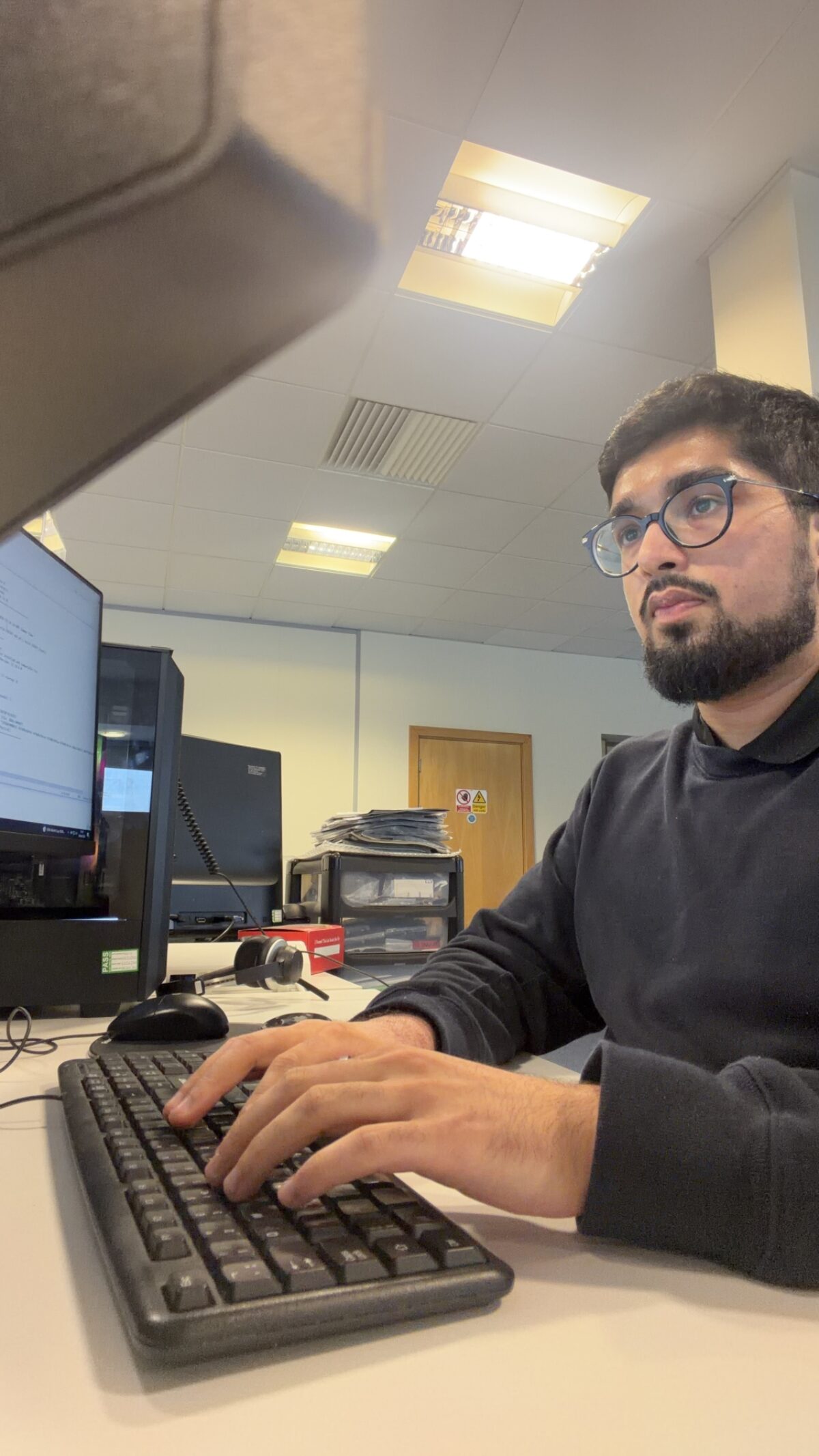
My name is Haris Saif, and I recently graduated from the University of Glasgow with a BEng (Hons) in Aeronautical Engineering. I applied to the Saltire Scholars Programme because I wanted an internship that would challenge me technically while giving me real exposure to industry. Not just shadowing, but contributing to work that mattered. As a fresh graduate, I was looking for the chance to apply what I had learned in a professional environment and develop the kind of practical skills that lectures alone cannot teach.
About My Internship
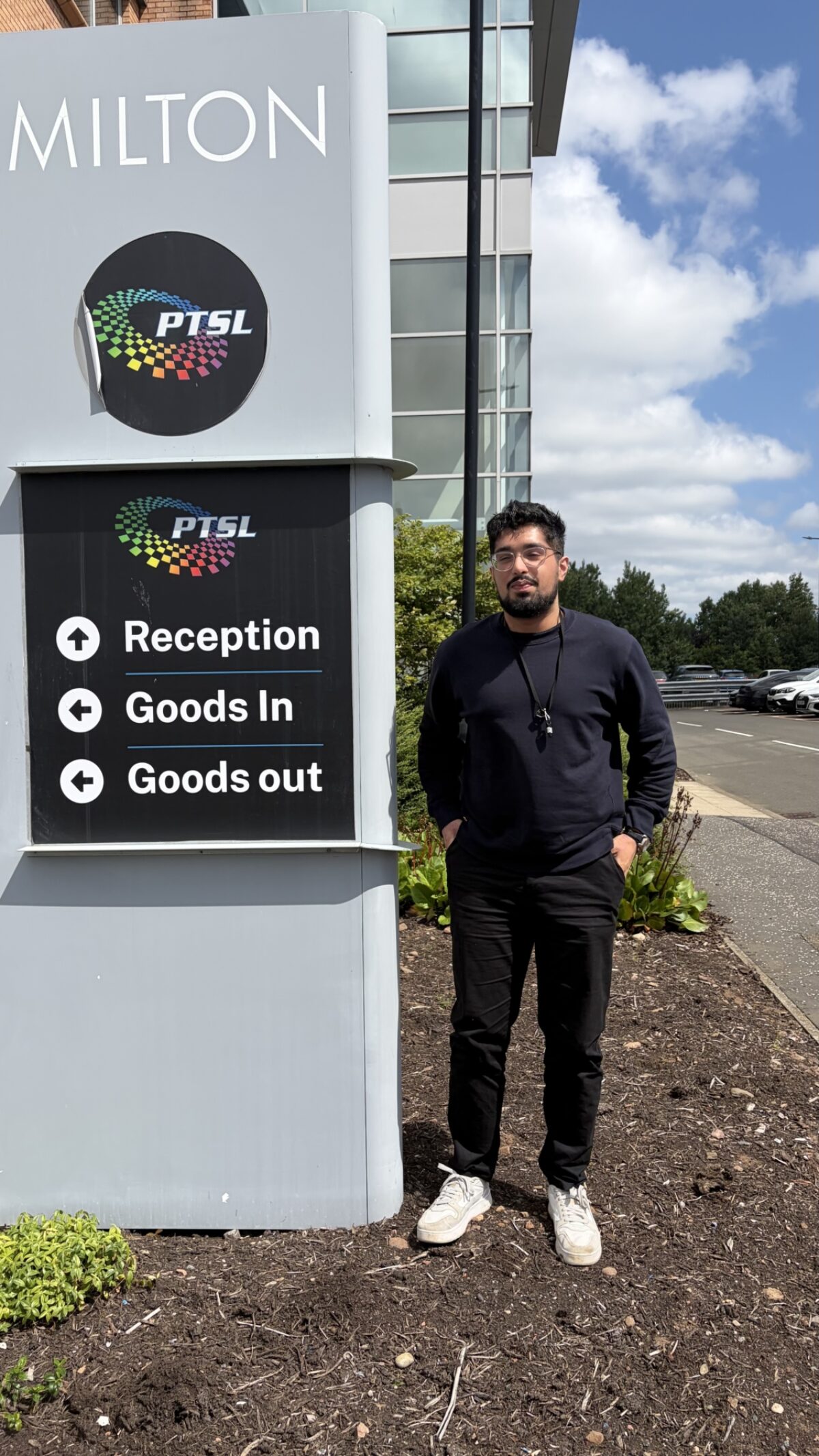
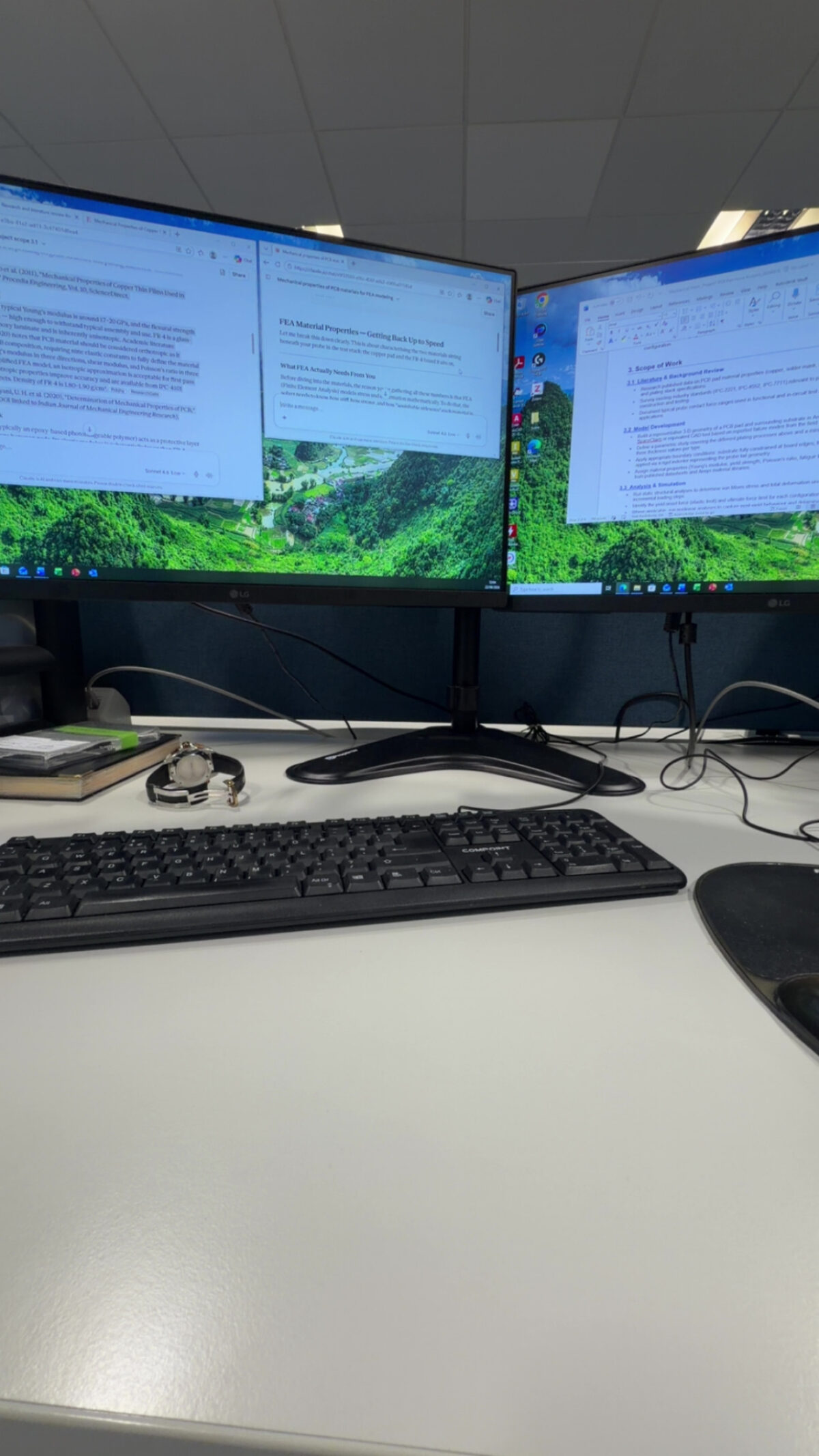
I interned at Probe Test Solutions Limited (PTSL) in Hamilton, Scotland, as part of their Mechanical Design team. PTSL designs and manufactures bespoke test probe equipment used in the semiconductor industry, and my project sat at the intersection of mechanical simulation and materials science. My core task was to build and run Finite Element Analysis (FEA) models in Ansys Mechanical, simulating how PTSL's test probes interact with different printed circuit board (PCB) configurations. The goal was to give the engineering team a simulation-based tool to complement their physical testing, helping them predict performance outcomes and optimise probe designs more efficiently.
While my degree was in aeronautical engineering rather than electronics, the simulation methodology transferred directly. My dissertation had used CFD in STAR-CCM+, and I had experience with Abaqus FEA from the university's hydrogen fuel cell racing team. The core principles of meshing, boundary conditions, solver settings, and material modelling were the same. What changed was the application, and that was precisely the point. Saltire gave me the chance to prove that engineering fundamentals are transferable across industries.
Impact and Experience
Over the 10 weeks I produced a literature review, built validated simulation models, ran a full parametric study across multiple configurations, and delivered a comprehensive technical report that went through several revisions before being signed off. Some of the simulation results were counter intuitive and challenged assumptions about how certain materials behave under probe contact. Being able to explain those findings to experienced engineers, and seeing them take the results seriously, was one of the most rewarding moments of the internship.
Beyond the technical work, I built strong professional relationships with my supervisors, Andrew Mill (Engineering Manager) and Michal Paslawski (Mechanical Design Team Leader). They gave me genuine ownership of the project, the space to troubleshoot problems independently, and feedback that was direct and constructive. That kind of mentorship, where you are treated as a colleague rather than a student on placement, made all the difference.
How I Have Changed
Before this internship, I knew how to run simulations. After it, I know how to own a project. There is a big difference between completing a university assignment where everything is defined for you and building something from scratch in a domain you have never worked in, debugging it when things break, and then presenting results that challenge established thinking. This experience taught me how to manage ambiguity, make engineering judgements with incomplete information, and communicate technical findings to people who need actionable conclusions rather than academic theory.
My confidence has grown enormously. When I started, I was working with materials and processes I had no prior experience with. By the end, I was having technical discussions with engineers who have spent decades in this field. That shift, from feeling out of my depth to contributing meaningfully, is something I will carry forward into whatever comes next.
Pay It Forward
If you are considering the Saltire Scholars Programme, my advice is simple: apply, and do not overthink whether you are "qualified enough." I applied as an aeronautical engineering graduate to a role in semiconductor test equipment. On paper, it was not an obvious match. In practice, it was one of the best professional experiences I have had. The programme places you in a real role with real responsibility, and the companies that host Saltire Scholars genuinely want you to contribute, not just observe.
Go in with the mindset that you are there to add value from day one. Ask questions, take ownership, and do not be afraid of the uncomfortable moments when you do not know something. Those are the moments where the real learning happens. Being a Saltire Scholar means being part of a community of ambitious students willing to step outside their comfort zones. For me, it meant proving to myself that I could deliver professional-grade engineering work in an industry I had never touched before. And that is something no lecture theatre could have given me.