
One naturally expects the purpose of becoming an entrepreneur is to identify a business opportunity with the aim of creating a venture that is both innovative and makes a profit.
That was also Jamie Burns' goal when he set up Ailsa Reliability Solutions but with an additional aspiration:
"We describe ourselves as a purpose-led company because we are not just here to make money," he says. "We have a clear focus, which is to save money for our clients and help them become more planet positive in their operation. We do that by eliminating unplanned downtime and reducing energy in key critical processes. These clients are among the largest in their sectors and include BP, Shell and Harbour Energy in the oil and gas fields plus Merck and DSM-Firmenich in the world of life sciences and pharmaceuticals.
"Plus, we're working with companies of the scale of Viridor and Melton Renewable Energy and are now starting to work with SSE," he adds.
It's an impressive CV for the company which was launched in Kilwinning in September 2020. Six months later he was joined by Kane Taylor, now operations director and who is seen as an expert in condition monitoring.
The company works in such specialised areas as Vibration Analysis, Motor Current Signal Analysis (MCSA), Partial Discharge, Lubrication Management, thermographic surveys, machine healthcare analysis and borescope, using data to predict failures and plan repairs.
To the layman, the task list is a daunting one.
"Basically, what we are doing is trying to evolve these industry sectors to do achieve things more efficiently through technology that is becoming more cost effective and to help these industries to become more digitally enabled," explains Burns.
The clients the company works with, he says, have complex systems.
"If they experience a failure the cost is significant but the return on investment through working with us is swift. We are saving people more than 10 times the money they would ever pay during downtime."
Burns ran repair businesses at a global engineering business prior to founding Ailsa Reliability Solutions.
"If something broke down, we would send people to locations all over the world to deal with these situations I but realised that in many cases this was a waste of clients' money - and had an environmental impact as some of the equipment we were moving for repairs weighed more than ten tons. So rather than being the 'firefighters' Ailsa was founded to enable us to become the fire prevention officers. We can tell people when problems are imminent so that they don't have to experience the stress, environmental impact and cost of that downtime. It also means that means that our clients can trust the data and trusted advice we give them, because we have no vested interest in any downstream works that have to take place."
The company's own Ailsa Vision Platform was developed after listening to customer feedback and engaging with clients who were looking at rolling out continuous monitoring technologies across sites.
"As there is no sensor or technology on the market that can fulfil all applications and processes the management of the data gathered was a concern to clients, as each technology communicates in different ways and formats," says Burns.
Ailsa Vision was developed to obviate this challenge as it can take the data from any downstream technology and bring it data into a centralised dashboard, enabling clients to monitor and manage alarms and look at trends for all the equipment across their sites.
As with any growing company, Burns concedes there have been challenges along the way.
"We have a good philosophy underpinning the business; however, the main obstacle in the past couple of years has been working capital as any company can only grow at a rate that matches how much money you have in the bank."
A loan for £500,000 last year was obtained through the British Business Bank's Investment Fund for Scotland via fund manager the FSE Group. It enabled Ailsa to put a robust management structure in place and invest in the software which has enhanced its growth.
"Our initial turnover was £55,000, year two saw that increase to £250,000 then grow through £700,000 to £1.3 million. That loan has allowed us to take software development in house so this year we are renewing a focus on growth and should see a turnover of just over £2 million."
Given this encouraging curve the company has exciting prospects and Burns is enthusiastic about its future.
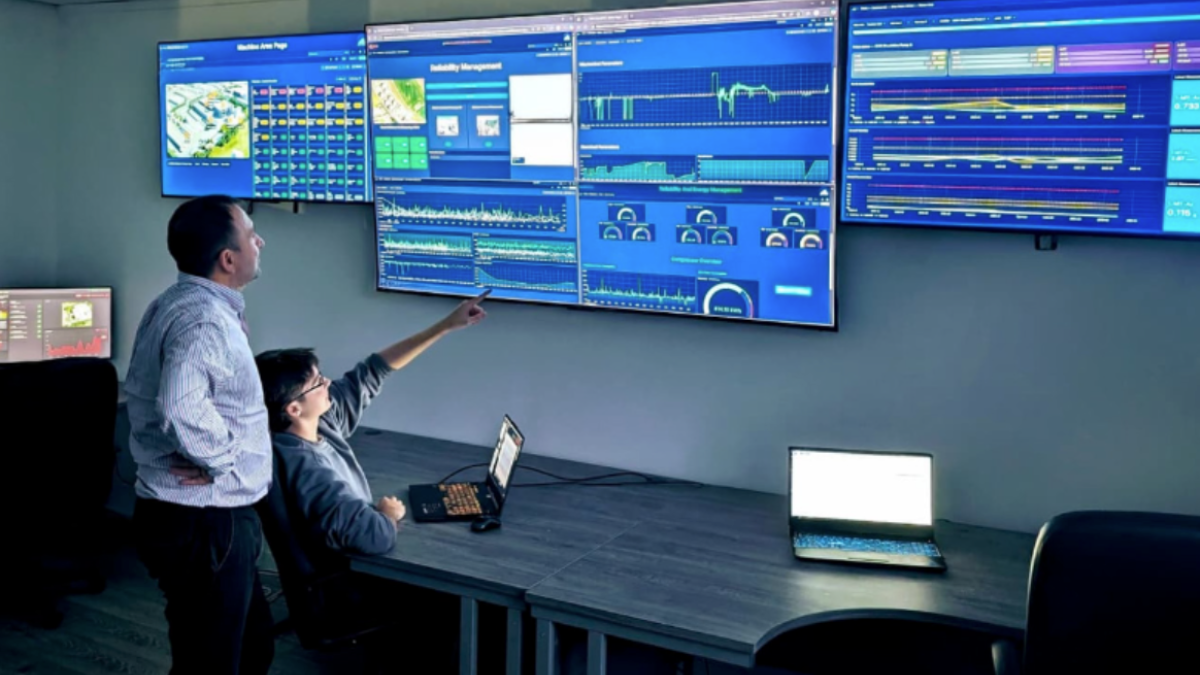
"We're aiming to scale up quickly while engaging in sales and marketing and looking to expand into the US while enlarging our 'Mission Control' which now remotely monitors more than 5000 assets per month," he says.
"We can monitor clients' assets from Ayrshire all over the world and will be a global centre of excellence for the remote monitoring of green and digital technologies."
Management and analysis of this amount of data is challenging with regards to the skills and experience required.
To combat this Jamie and Kane have developed their own IP in a knowledge based intelligent system "AI". This intelligent system will do the heavy lifting of the data analysis and will free up time for the analysts to focus on the more complex faults, with the system picking up all standard faults in a fraction of the time.
With 27 current employees Ailsa is looking to increase that to 35 by the end of this calendar year and its target of £15 million turnover by 2030 is ambitious.
"With our client base of major industry players and the use of leading AI technology we can grow to three times our current size without even bringing new customers on board, rather through working across larger sites and the assets of existing clients," he explains
Burns says his involvement with Entrepreneurial Scotland and its peer- to-peer learning environment has been of immense value.
"Running a growing business can be a lonely place to be and it's great to hear about what other people are doing, the challenges that they encounter and how they've addressed that so I've learned something important in all the meetings I've been to with them."
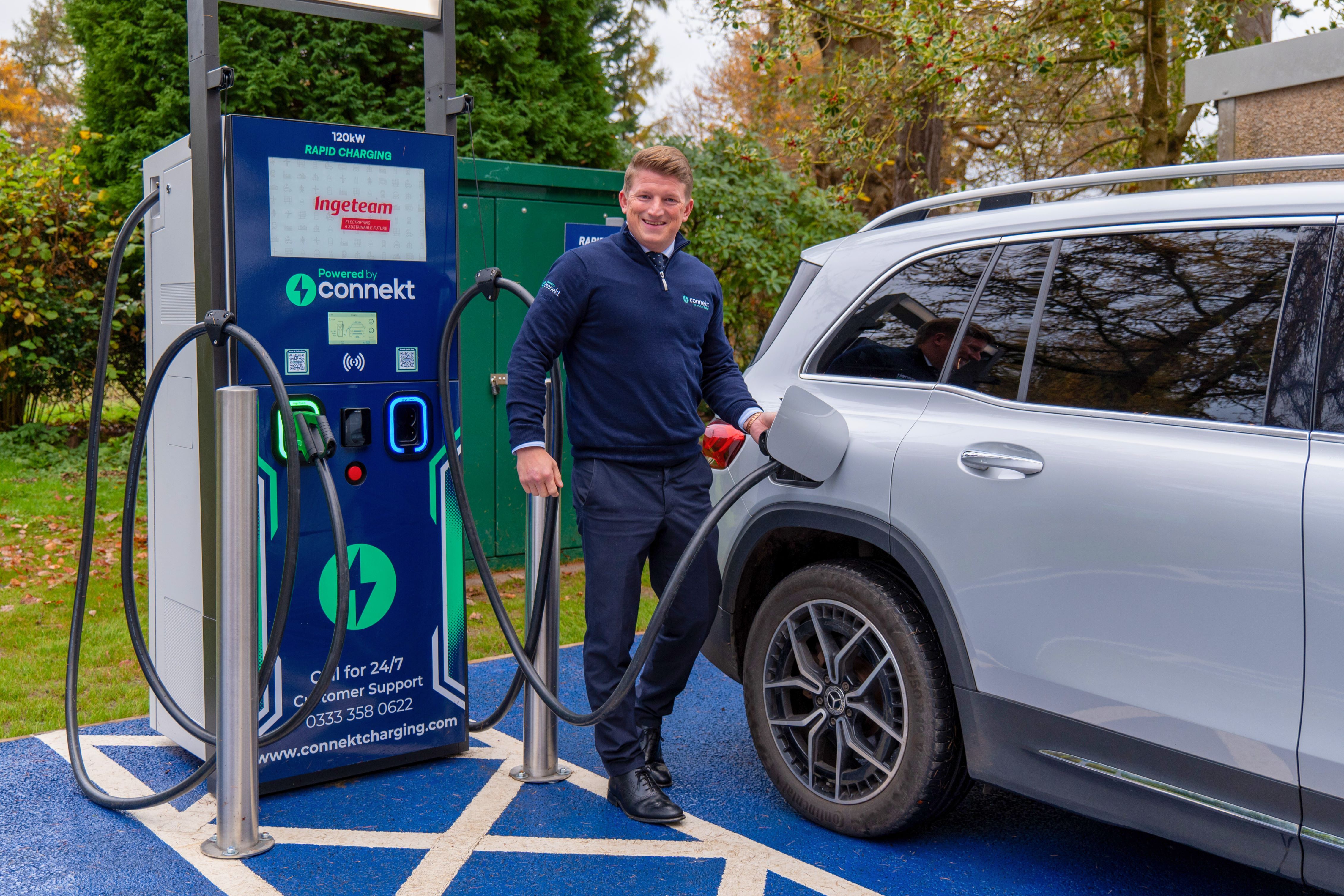
Connekt EV Charging, Founded by The Exchange by Entrepreneurial Scotland Member, Johnny Manning, has secured a multi million pound growth investment from Growth Fund 1 (GF1), an investor backing high-potential UK businesses.

Jude McCorry shares how the Cyber and Fraud Centre Scotland is helping businesses and individuals stay safe online through accessible cyber protection services.